
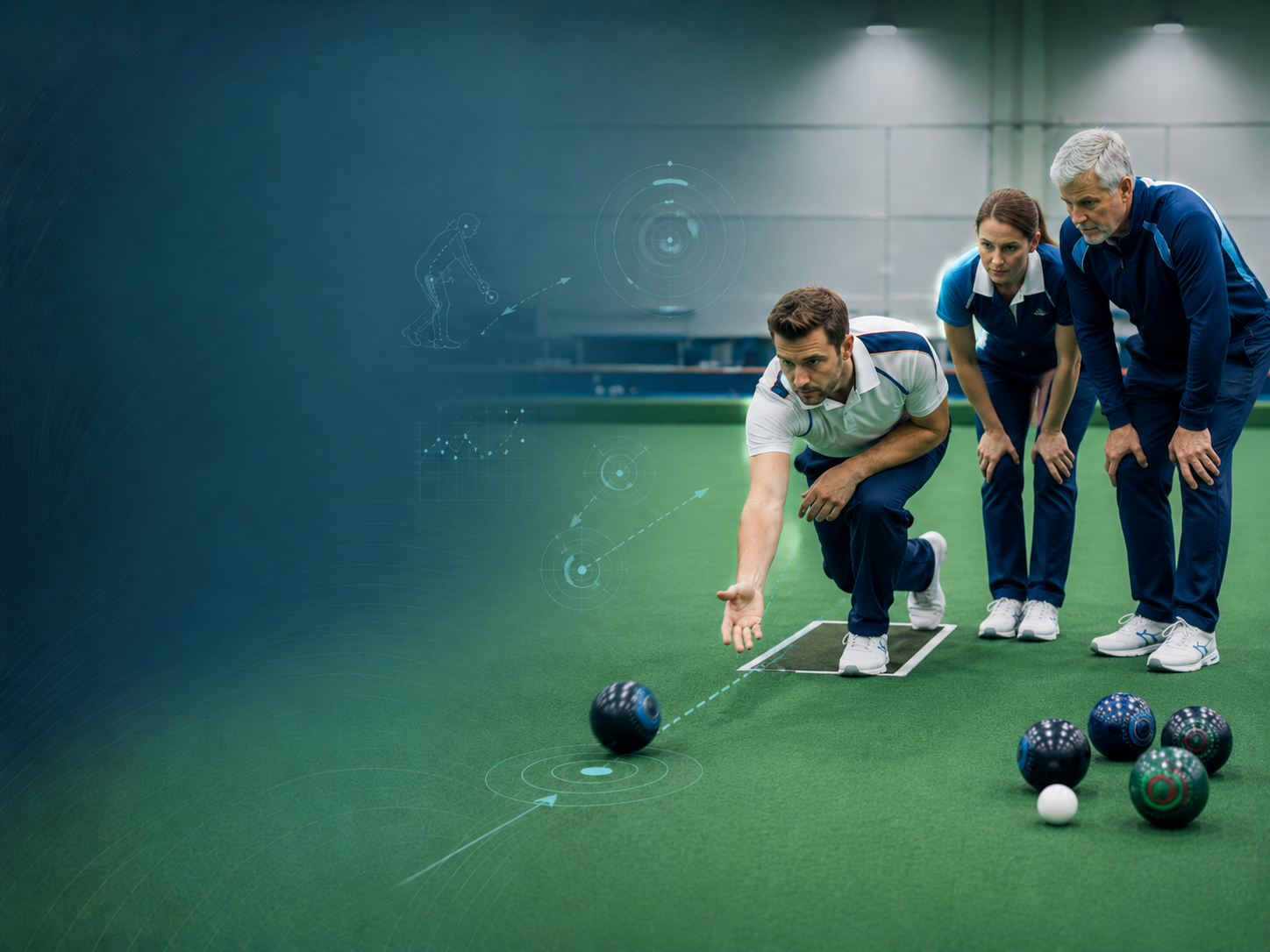
Coach Development
Observation
"Good coaching starts with seeing what is actually happening."
Try a simple observation cycle
Watch several bowls, describe the pattern without judgement, then decide whether it matters to the player's purpose. For example, a short bowl may reflect weight, alignment, pace or decision uncertainty.
Takeaway: observe enough evidence to choose one useful priority rather than correcting everything at once.
Outcome vs Process
Outcome: Where did the bowl finish?
Process: What happened during preparation, movement, release and follow-through?
Strong observation connects both, rather than reacting only to where the bowl stopped.
Look at the Whole Delivery
- stance,
- balance,
- alignment,
- movement,
- arm path,
- release,
- follow-through,
- consistency.
Watch More Than One Bowl
One delivery is rarely enough evidence. Observe several bowls across both hands and different situations before deciding what to prioritise.
Look for Patterns
- always short,
- narrow only on one hand,
- line changes under pressure,
- pace changes late in delivery.
Ask Before You Tell
Use questions that build player understanding:
- What did that feel like?
- What were you trying to achieve?
- What changed?
- What would you adjust?
Avoid Over-Coaching
Do not correct everything at once. Prioritise one or two factors that most influence performance right now.
Observation is not about finding faults. It is about identifying what matters most.
Looking for structured learning resources?
Registered pupils and coaches can access deeper course material through their protected area.
Outcome is not the whole cause
A bowl finishing short may involve weight, but it may also reflect an inaccurate perception of distance, a rushed routine or an unclear target. A narrow bowl may come from alignment, release, balance or a deliberate choice of line. Good observation keeps several explanations open until the evidence becomes clearer.
Look at stance, balance, rhythm, delivery line, release and follow-through, but do not assume that every visible difference needs correction.
Observe routine and behaviour
Players bring attention, confidence and decision habits to the delivery. Does the player pause before choosing a shot? Do they speed up after a poor bowl? Do they communicate a purpose, or begin moving before the decision is settled?
These observations can explain why a technically sound delivery changes under pressure.
Practical bowls example
A player is short on three draw attempts. Instead of immediately asking for more weight, compare the target they selected, the pace of the routine and the delivery rhythm. If the player says the target looked farther away than it was, the priority may be Perception of Distance rather than a major technical change.
Watch another small sample, then decide whether the next intervention should concern perception, pace or movement.
What to notice
Record observations neutrally: situation, intended purpose, outcome, repeated process detail and possible next question. Include strengths to preserve, such as a stable balance or clear target choice.
Takeaway: observe enough evidence to choose one useful priority, and know when not to intervene.
Further learning on this site
Detailed observation records and coach-development notes remain in protected materials.