
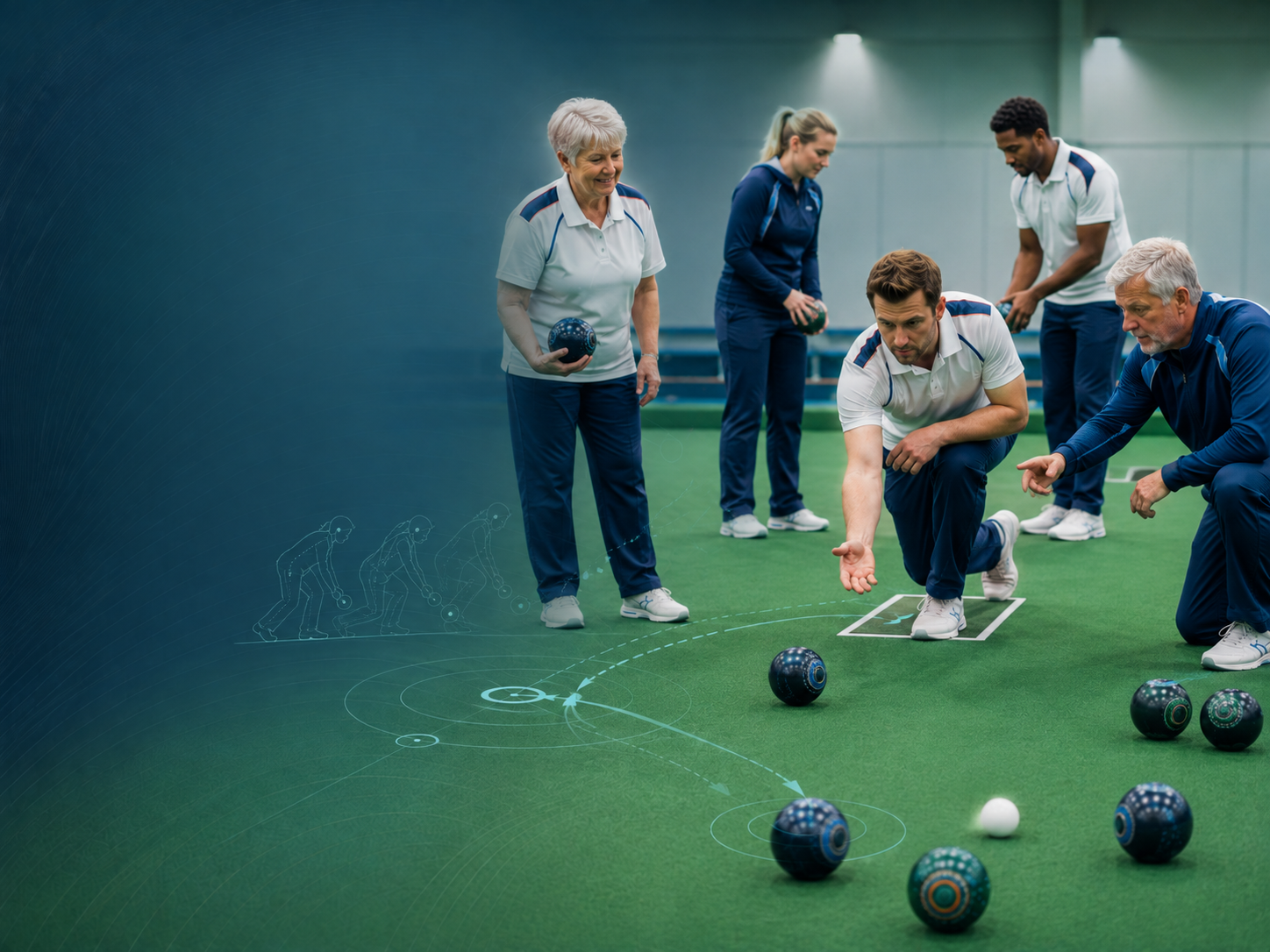
Develop the Player, Not Just the Shot
Long-term progress comes from tailored coaching decisions.
Coach Development
Coaches support development by balancing progression, confidence and challenge.
Players differ in confidence, learning speed, movement and tactical understanding.
Build from achievable goals to more complex match situations.
Too little challenge slows growth. Too much can reduce confidence.
Use practice to build habits, then test transfer under competitive pressure.
Looking for structured learning resources?
Registered pupils and coaches can access deeper course material through their protected area.
A player may be technically capable but tactically uncertain, or tactically aware but inconsistent under pressure. Start with evidence rather than assumptions and recognise what is already working. A player’s current stage is shown by what they can repeat, explain and transfer, not just by an occasional excellent bowl.
Short-term priorities should be observable and limited. A medium-term aim might be steadier weight control; a longer-term aim might be more independent decision-making in match play. One or two priorities are usually more useful than a long list of corrections because the player can recognise what evidence matters.
Technical work supports execution, tactical work supports purpose, mental work supports commitment and recovery, and game management connects decisions to score and context. These areas interact. A player who delivers consistently but repeatedly attacks when Protect or Reduce is needed has primarily a tactical development need, not necessarily a technical one.
Review what changed, what remained difficult and what evidence is missing. A player may control weight well in practice but become short under match pressure; the next priority may involve routine, attention and COMMIT rather than basic delivery mechanics. A plan should respond to the player, not force the player to fit a fixed sequence.
Ask: “Which decision felt clearer this week, and what evidence supports that?” Then check whether the skill transfers into a competitive end with a score, changing rink pace or a teammate depending on the result. Increasing independence means the player can explain the priority, test it, and REVIEW the result without waiting for the coach to label every bowl.
The existing Player Development Review material provides a deeper structured resource for identifying priorities, recording useful evidence, recognising improvement, checking transfer into play and deciding what to work on next. This public page introduces the principle without reproducing the protected document.
Ownership becomes visible when the player can name the current priority before practice, recognise when it matters in a live end, and suggest a sensible adjustment after the bowl. The coach still provides challenge and perspective, but the player increasingly carries the thinking into competitive play and future reviews.
Takeaway: progress is evidence-led, focused and adaptable; the goal is a player who increasingly understands and owns the next step. Further structured coach-development material is available through the appropriate protected pathway.