
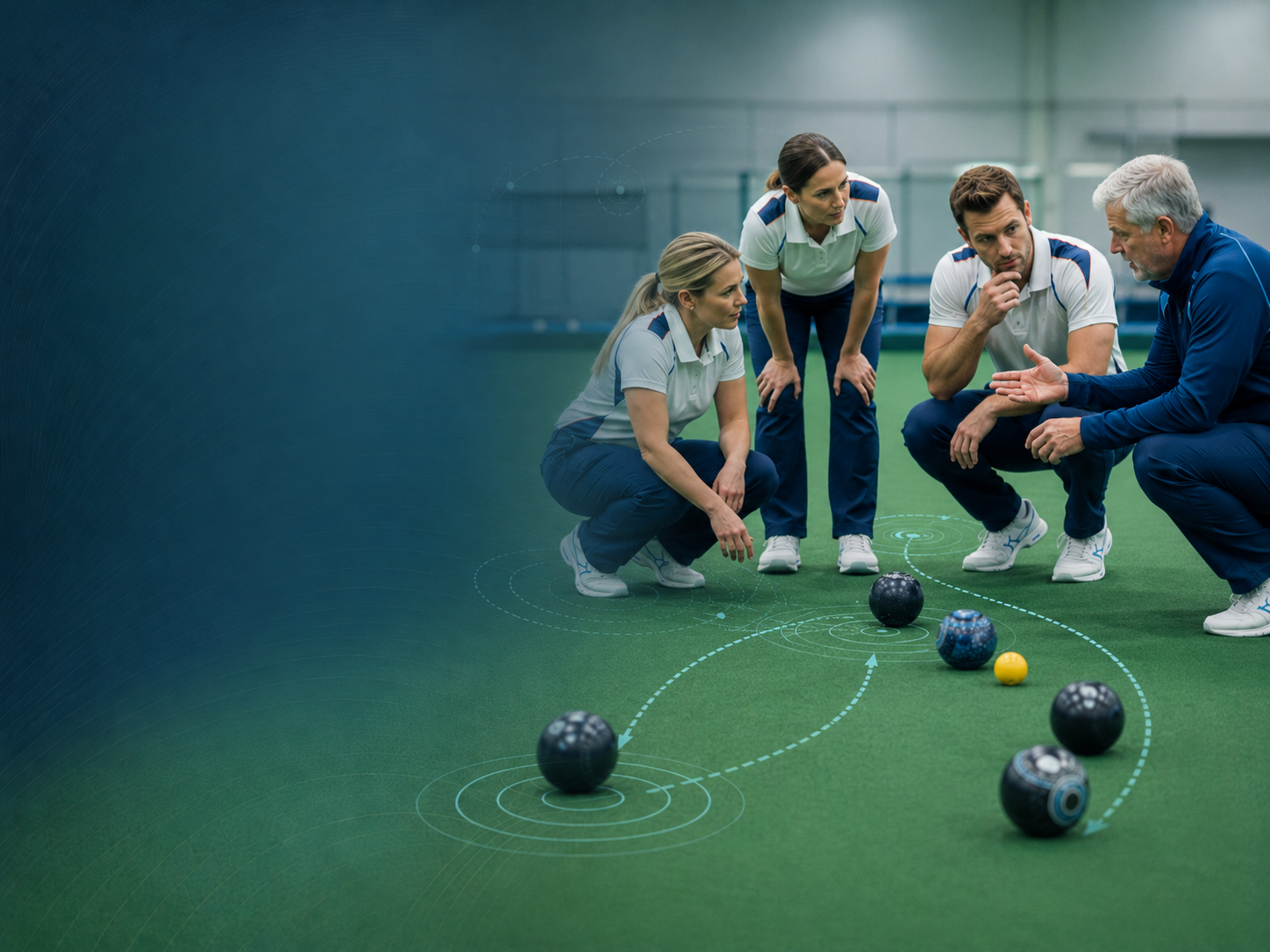
Team-First Bowls
Better communication creates better tactical decisions.
Improve Your Bowls
Learn how roles, communication and shared decisions improve team outcomes.
Each position has a different job. Know what your bowl needs to contribute in that role.
Use concise, clear language focused on purpose and options.
Constructive support improves confidence and execution under pressure.
Build the end gradually with bowls that create useful position.
Agree whether the bowl should score, protect, block, recover or attack.
Choose the option that best serves the end, not the most dramatic shot.
A Lead may establish length and position, a Second may build or stabilise the head, a Third may combine play with tactical recovery, and a Skip manages broader options. These are usual contributions, not rigid labels: the head, score and bowls remaining can change the job during an end.
Use concise, timely language about purpose, target and risk. “Draw for second,” “Protect the backhand,” “We need to Reduce,” and “Minimum Effective Weight” communicate more clearly than a long instruction while the player is delivering. The existing Roles and Communication material develops this further in protected learning.
Teams create structure through shot bowls, support bowls, cover, back position and blocks that restrict opponent access. A dramatic shot is not automatically team-first if it removes useful bowls or gives the opponent permission.
After a poor bowl, help the next decision rather than replaying blame. A calm reset provides updated head information, a clear purpose and confidence in the team process. Avoid visible frustration and several technical corrections mid-end.
Before a bowl, agree whether the job is draw for second, protect the shot or reduce the count. Afterwards review what changed and whether the next player needs a different role.
Example: the Lead has one useful front bowl, the opposition holds shot, and the Second can chase the jack or add useful back position. Build may be wiser than immediate Attack because it creates support and preserves options. If the head deteriorates, the Third or Skip may then Recover, Reduce or Attack instead.
Takeaway: good team bowls is more than four individuals bowling well.
Responsibilities can change after one bowl moves the jack or removes a support bowl. A good team updates the plan, keeps the communication calm, and gives the next player enough information to make a fresh decision.
Detailed role progression and team practice remain in protected learning.
Looking for structured learning resources?
Registered pupils and coaches can access deeper course material through their protected area.