Improve Your Bowls
Strategy & Tactics
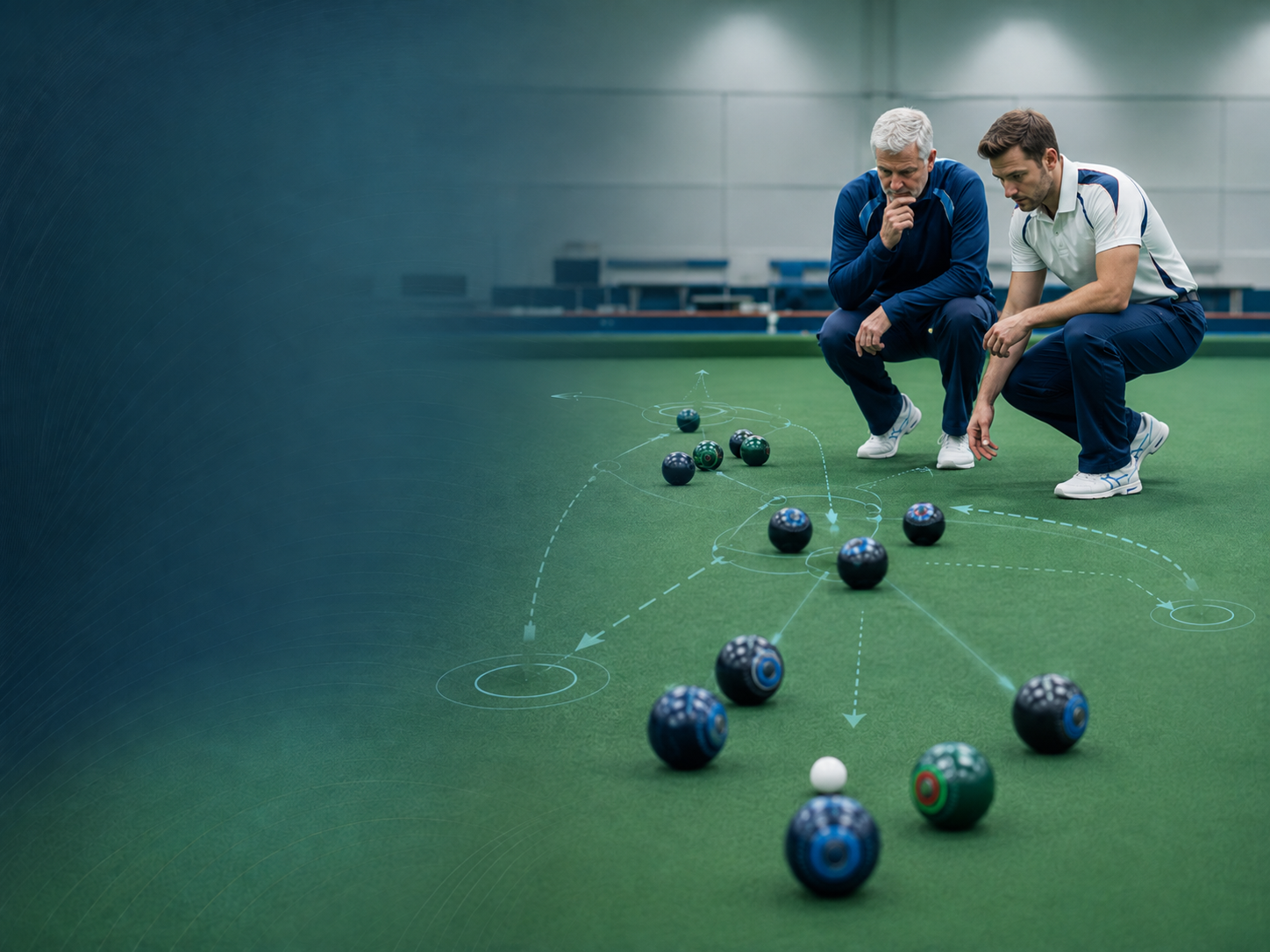
"Good bowls is not simply about getting close to the jack. Every bowl should have a purpose."
READ
Understand what the head actually looks like.
STATE
Recognise the current position, score and game situation.
PURPOSE
Decide what the next bowl needs to achieve.
TACTIC
Choose the broad approach that best serves that purpose.
SHOT
Select the actual shot and weight required.
COMMIT
Deliver decisively once the decision has been made.
REVIEW
Assess what changed and what the next player now faces.
READ to REVIEW
READ identifies what the head actually contains. STATE includes the score, end, current shot position, bowls remaining, last bowl and wider match context. PURPOSE asks what this bowl needs to achieve. TACTIC chooses the broad response; SHOT chooses the delivery.
COMMIT means executing the decision without changing it during delivery. REVIEW considers what changed and what the opponent can now do.
Purpose is not a shot type
Build creates useful options. Protect reduces access. Recover restores position after the head has gone against you. Reduce limits damage when winning is unlikely. Attack changes the head when the reward justifies the risk.
Protect might use a draw, cover or controlled weight. Reduce might use a draw or weighted shot. The purpose comes first; the delivery follows the situation.
Structure, Permission and Risk
Structure describes the opportunities and restrictions created by the existing bowls. Permission is what your choice or miss allows the opponent to attempt. Risk connects likelihood, consequence and reward.
A Useful Miss still creates cover, pressure, position or a safer next decision. A Damaging Miss worsens the head or removes your own support. Minimum Effective Weight means using no more force than the purpose requires, protecting an Affordable Loss where appropriate.
Situation 1: holding one late
You hold one with one bowl remaining and the opponent has last bowl. If the score rewards retaining the shot and the opponent has a clear draw route, Protect may be more valuable than chasing another shot. Cover can reduce permission; a safe draw may add structure.
The same head changes if you trail overall or need multiple shots. Then Build or Attack may be justified. There is no universal correct choice without score, end and last-bowl context.
Situation 2: three down
You are three down with one bowl remaining. Reduce may be more appropriate than a low-percentage drive when turning three into one protects the match position and the opponent has the last bowl. A draw or controlled weighted shot can limit damage.
Attack may still be right if the end is decisive, the required result is large, or the Affordable Loss is already acceptable. Consider opponent strengths, bowls remaining and what the miss gives away.
What to notice and try
Ask: What is the score asking for? What is the purpose? What is the Useful Miss? What is the Damaging Miss? What permission does this option give the opponent? What is the Minimum Effective Weight? What changes if I have the last bowl?
Takeaway: teach players to explain the decision, not wait for the coach to name every shot. Yard-On and Types of Shots become more useful when selected for a clear purpose.
Further learning on this site
Deeper Strategy & Game Management scenario banks, exercises and coach notes remain in protected learning.
Build
Create useful position and options.
Protect
Reduce the opponent's opportunity to change the head.
Recover
Regain useful position after the head has gone against you.
Reduce
Limit the damage when winning the end is unlikely.
Attack
Actively change or remove important bowls when the reward justifies the risk.
Interactive Practice
What Would You Play?
Use six short public scenarios to practise READ, STATE, PURPOSE, TACTIC, SHOT, COMMIT and REVIEW.
Every Bowl Needs a Job
A bowl may be intended to score, protect, block, trail the jack, remove a bowl, reduce loss, or create position.
A useful miss misses its primary target but still contributes positively.
A damaging miss creates a worse situation or gives the opponent an easier opportunity.
Decision Discipline
Minimum Effective Weight: use no more weight than is necessary to achieve the purpose of the shot.
Opponent Permission: before choosing an aggressive option, consider what opportunity a miss gives the opponent.
Good strategy is not about finding the most impressive shot. It is about choosing the shot that best serves the situation.
Looking for structured learning resources?
Registered pupils and coaches can access deeper course material through their protected area.
Next Steps
Keep developing your decisions through practical repetition, reflection, and guided support.
Use the public scenarios and decision framework here, then continue to structured coaching or protected learning when appropriate.