
Practical, Supportive, Purposeful
Each session helps players improve one step at a time.
Learn to Play
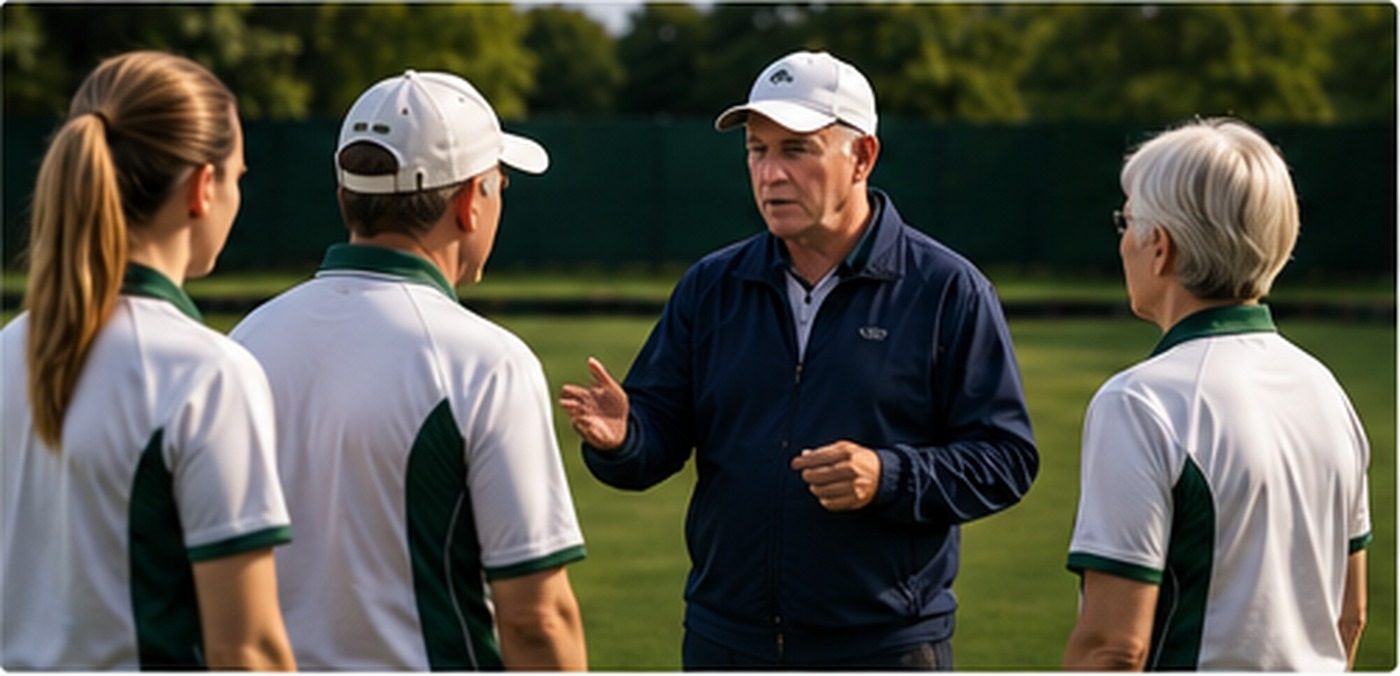
A structured session balances explanation, demonstration, practice and feedback.
Most sessions begin with safety, purpose and a simple focus for the day.
Players then move into demonstrations and guided delivery practice.
Coaches observe, ask questions and provide clear feedback linked to the intended shot.
Sessions finish with short review points and next-step practice goals.
A session normally starts with safety, equipment, the rink and a clear focus. The coach needs to know what the player wants to improve and what the current evidence suggests. Settling into the surface matters because pace, grip and sight lines can change the feel of delivery.
A coach may watch several deliveries before suggesting an adjustment. One short bowl does not prove a technical fault. Useful observation considers intended line, weight, balance, release and result together. This is why coaching is different from simply being told what to do.
Explanations should be brief enough to remember. A demonstration gives the player a picture of the task, but the player still has to discover how the movement feels. Practice then provides evidence, with feedback linked to the purpose rather than every visible detail.
Typical example: a player may first read a target, watch one demonstration, deliver several bowls, then discuss whether the result changed when the routine became rushed.
The same topic can need different language, challenge and pace for different players. A beginner may need clarity about the rink and target; a more experienced player may need a question about risk and permission. Good coaching adapts without losing the main objective.
Finish with one or two observations, a clear next question and a way to recognise progress. “I will notice whether my weight changes when I hurry the routine” is more useful than a long list of corrections.
Detailed session structures and progressive practice remain part of protected pupil and coach learning.
A player may arrive with a question such as “Why am I always short?” The coach can observe several bowls, ask what the player intended, demonstrate one reference point, and let the player test it. The session becomes a conversation supported by evidence rather than a stream of corrections.
Feedback should be specific enough to act on but short enough to remember. A player might leave knowing to watch pace when the routine is rushed. Detailed exercises and progression belong in protected material; the public principle is the reasoned process. A player should leave able to describe one useful observation, one adjustment to test, and one question to carry into the next session. That makes learning visible between visits and helps the coach adapt the next conversation.
Takeaway: a coaching session should leave the player clearer, not dependent on the coach beside every bowl.
Looking for structured learning resources?
Registered pupils and coaches can access deeper course material through their protected area.